
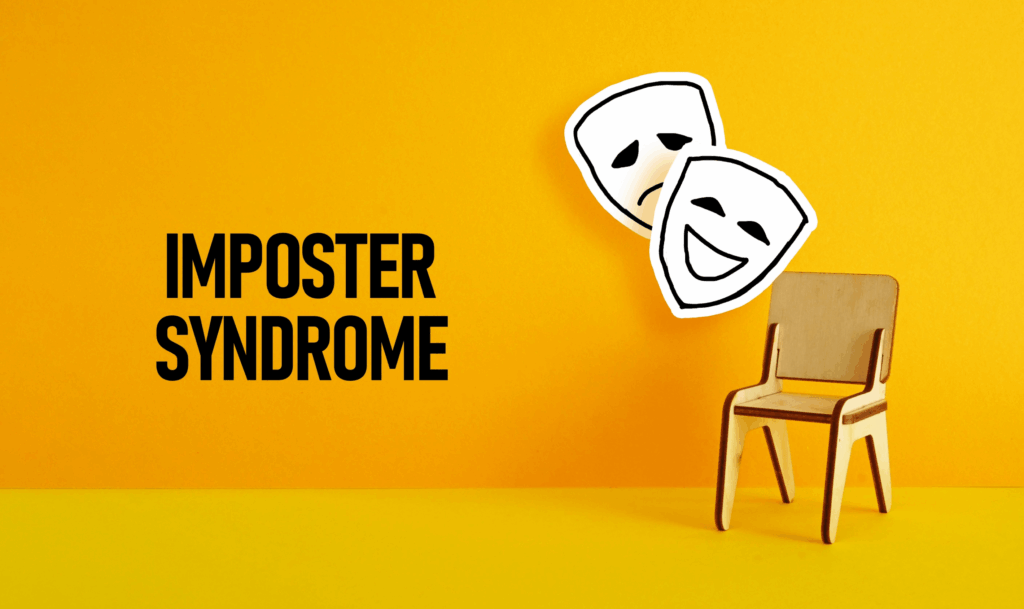
There is a particular hesitation I hear a lot. Someone will describe months, sometimes years, of feeling like a fraud at work. The bracing before meetings. The quiet certainty that one day they will be found out. And then they pause and say some version of the same thing: "But I know it's not a real condition, so maybe I'm making a fuss about nothing."
It is a strange habit we have, waiting to be officially allowed to struggle. As though the discomfort only counts once it has a name in a manual somewhere, and until then we are supposed to carry on and keep quiet about it. So it is worth saying plainly, right at the start. Imposter syndrome is not a formal diagnosis. And that changes almost nothing about whether it is worth taking seriously.
What people actually mean by imposter syndrome
When people talk about imposter syndrome, they are usually describing a fairly specific pattern. There is real evidence of their competence, the results, the feedback, the responsibility they have been trusted with, and yet none of it seems to land. Success gets quietly explained away as luck, or good timing, or having fooled the right people. Underneath it runs a low, persistent hum of if they knew what I was really like, this would all fall apart.
From there the behaviour tends to follow. Over-preparing so there is no possible gap for anyone to spot. Working longer than the job needs, not out of ambition but to stay one step ahead of exposure. Holding back from the promotion or the pitch because putting yourself forward feels like inviting scrutiny. It is exhausting, and most people carry it entirely on the inside while looking, from the outside, like they are coping perfectly well.
Why it isn't in the diagnostic manual
Imposter syndrome does not appear in the two big classification systems clinicians use, the DSM-5 or the ICD, and there are some sensible reasons for that.
Part of it is overlap. The self-doubt, the anticipatory dread, the harsh self-monitoring, these already sit inside other things we do have language for, like anxiety and low self-esteem. Part of it is that imposter feelings tend to be situational rather than constant. They flare up around a new role, a promotion, a moment of visibility, and settle again when the pressure eases. And part of it is that what we are really describing is a pattern of thinking and of relating to yourself, rather than a single discrete disorder with a tidy set of criteria.
Here is the piece worth holding on to, though. A diagnostic manual is essentially a filing system, a way for clinicians to organise and communicate about difficulties. Whether or not something has its own drawer in that cabinet tells you how the system is built. It tells you very little about whether your experience is real, or whether it deserves attention. Plenty of things that genuinely get in the way of a good life have never had an official label. The absence of a name is not evidence that nothing is wrong.
The quiet cost of waiting for permission
The trouble with treating the "it's not a real condition" thought as a reason to say nothing is that it becomes one more way of talking yourself out of things.
I think of these as away moves, the small choices we make to sidestep discomfort in the short term. Not applying, because you are not quite ready. Not speaking up, because someone might notice you got it slightly wrong. Not resting, because slowing down feels like it might let the whole thing catch up with you. Each one makes sense on its own, and each one quietly teaches your mind that the fear was worth listening to, so the pattern pulls a little tighter next time. Over months and years that adds up to opportunities left on the table, achievements that never get to feel like yours, and a background tiredness that comes from constantly managing something you have never let yourself name.
None of that requires a diagnosis to be real. You can feel every bit of it while being, by any outside measure, entirely fine.
The question that actually matters
So the more useful question is not "is this an official condition?" It is "is this getting in the way of how I want to live?"
If the second-guessing is costing you energy, opportunities or enjoyment on a regular basis, that is reason enough to do something about it, whatever the manuals do or do not call it. And there is a lot that can be done. Working with imposter feelings is rarely about eliminating self-doubt or arriving at some permanent state of confidence. It is more about changing your relationship with the doubt so it no longer runs the show, learning to step back from the harsh inner commentary, and gradually letting your choices be led by what matters to you rather than by what feels safest in the moment. Approaches like CBT, ACT, CFT and EMDR all give us practical ways into that work, and I have written more about what that looks like in practice in how therapy can help with imposter syndrome.
You do not need a label as a ticket of entry. You are not broken, and you are not making a fuss about nothing. You are stuck in a pattern that makes complete sense, and stuck is something we can work with.
Get in touch
If you recognise yourself in this, you are welcome to book a free 15-minute phone consultation. It is a relaxed, no-pressure conversation about what is going on for you and whether working together might be a good fit.