

Dean Watkins
I’m a therapist with a special interest in working with anxiety, self-doubt, and perfectionism - especially when they show up in thoughtful, capable people who don’t feel that way inside. I understand how these struggles can quietly shape how we see ourselves and what we believe we’re capable of, even when others view us differently.
My own experiences have shaped how I work. I know what it’s like to be held back by worry, to downplay your strengths, or to feel you have to keep proving yourself. These insights help me to meet clients with understanding, not judgement - and to work with you in a way that feels respectful, collaborative, and deeply human.
My work is guided by a few core values
Compassion
Meeting yourself with care, especially when it's hard.
Autonomy
Feeling more in charge of your choices
Clarity
Understanding what's really going on, not just the surface.
Sustainability
Building changes rooted in what matters to you.
How I Work
The therapy process can feel unclear at first, especially when you’ve spent a long time trying to figure things out on your own.
To make it easier, I like to offer a clear framework for how we’ll work together, one that helps you make sense of what’s happening, build the right skills, and move forward in a sustainable way.
Over time, I’ve developed a four-step approach grounded in evidence-based therapy, that brings together the best of CBT, ACT, CFT, and EMDR.
It’s a structured yet flexible process designed to help you understand your patterns, respond to them more compassionately, and build a life that reflects what really matters to you.
The 4 Steps to Working With Anxiety & Self-Doubt
1. Awareness: Seeing the Pattern Clearly
Recognising when and how your struggles show up - triggers, thoughts, emotions, responses, and what the pattern is costing you.
2. Understanding - Making Sense of What's Happening
Psychoeducation on how the mind works and why self-doubt often reflects your values, not a flaw.
3. Skills - Working With Your Mind, Not Against It
Dropping Anchor, Defusion, Self-Compassion, Mindful Awareness - practical daily tools.
4. Action - Living in Line With What Matters
Clarifying values and taking small, practical steps even when confidence wavers.
Moving Forward
Through these four steps, you’ll learn how to notice patterns earlier, make sense of what’s happening, apply practical tools, and take action guided by what matters most.
You won’t just learn to “cope”, you’ll build a deeper sense of self-trust and psychological flexibility that lasts well beyond therapy.
If this approach resonates with you, feel free to get in touch or book a free 15-minute consultation.
We can explore what’s happening for you right now and how this process might help you move forward.
EDUCATION
British Association for Behavioural & Cognitive Psychotherapies - BABCP Accredited Therapist
EMDR Therapy Part 3 Training
PG Diploma in Compassion Focused Therapy - Compassionate Mind Foundation
BSc Hons in Cognitive Behaviour Therapy - University of Derby
PG Diploma in Cognitive Therapy for Severe Mental Health Problems - University of Southampton
PG Diploma in Cognitive Approaches to Counselling & Psychotherapy - Goldsmiths, University of London
Diploma of Higher Education in Nursing (Mental Health) - University of Plymouth
BACKGROUND & EXPERIENCE
I’ve worked in mental health for over 20 years, originally as a mental health nurse before training as a psychotherapist. This long-standing experience has given me a deep understanding of the challenges people face - and how to meet them with care, skill, and patience.
Throughout my career, I’ve supported adults struggling with various anxiety disorders, depression, PTSD, low self-esteem, imposter syndrome, perfectionism, and procrastination. I’ve worked in both NHS and private settings, and bring a steady, grounded presence to the therapy room.
I’m trained in several evidence-based approaches, including:
-
Cognitive Behavioural Therapy (CBT)
-
Compassion Focused Therapy (CFT)
-
Acceptance & Commitment Therapy (ACT)
-
Eye Movement Desensitisation & Reprocessing (EMDR)
This integrative approach allows me to tailor therapy to each client’s needs - whether that means understanding thought patterns, working with difficult emotions, exploring behaviour cycles, or building a stronger sense of self.
I continue to value learning and reflection in my practice, and I bring the same steady care to my clients that I’ve cultivated throughout my years in the field.
Therapy Approaches
Read more about the different therapy approaches used.

Cognitive Behaviour Therapy (CBT)
CBT is an evidenced based therapy model that is effective in the treatment of a wide range of psychological problems.

Acceptance & Commitment Therapy (ACT)
ACT is a form of CBT that has a growing and strong evidence base that focuses on developing the skills necessary to allow you to live your life fully and in line with your Values.
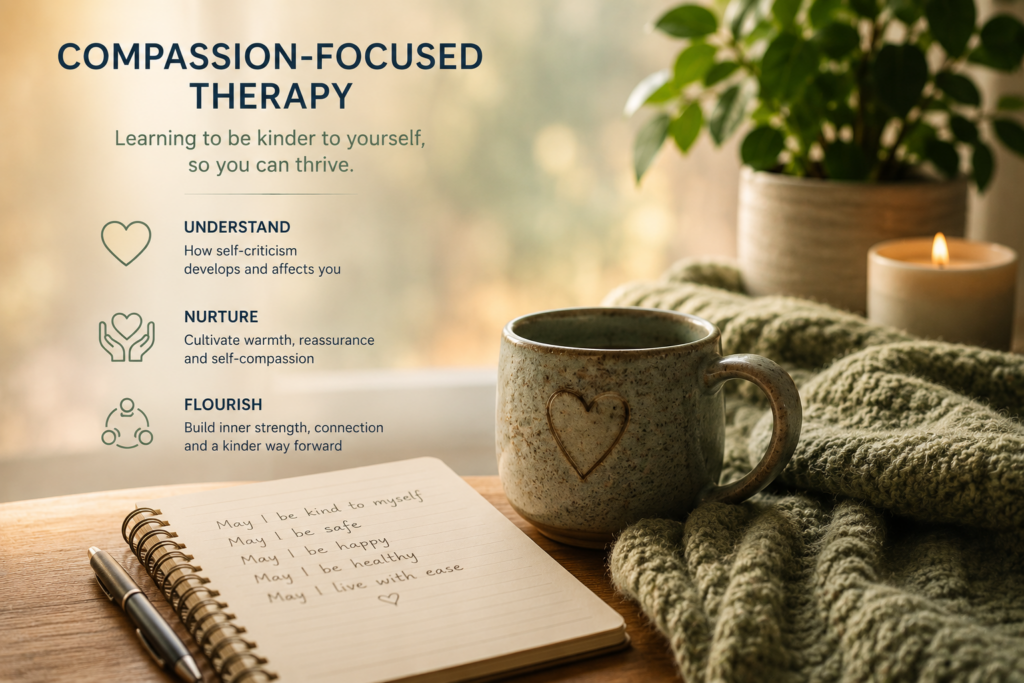
Compassion Focused Therapy (CFT)
CFT is draws on a number of theories with which helps to understand how we get stuck in unhelpful patterns due to our "tricky brains" and how to break free from these patterns.
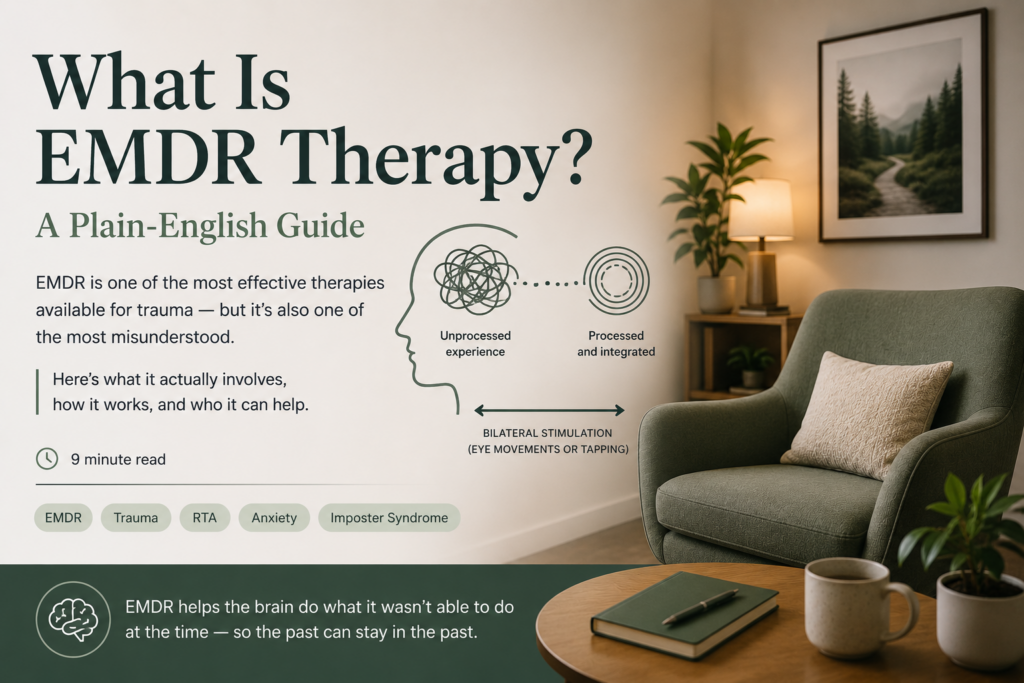
Eye Movement Desensitization & Reprocessing Therapy (EMDR)
EMDR Therapy is an evidenced based therapy that is effective in treating PTSD. It helps unblock and process stuck and problematic memories.
Therapy Approach FAQs: CBT, ACT, CFT & EMDR
If you're wondering what therapy with me might involve, here are some common questions about the approaches I use — and how they can help with issues like imposter syndrome, self-doubt, perfectionism, anxiety, and more.
Still curious? Feel free to get in touch if you have questions or want to know more about how I work.