Hi. I'm H2 section title.
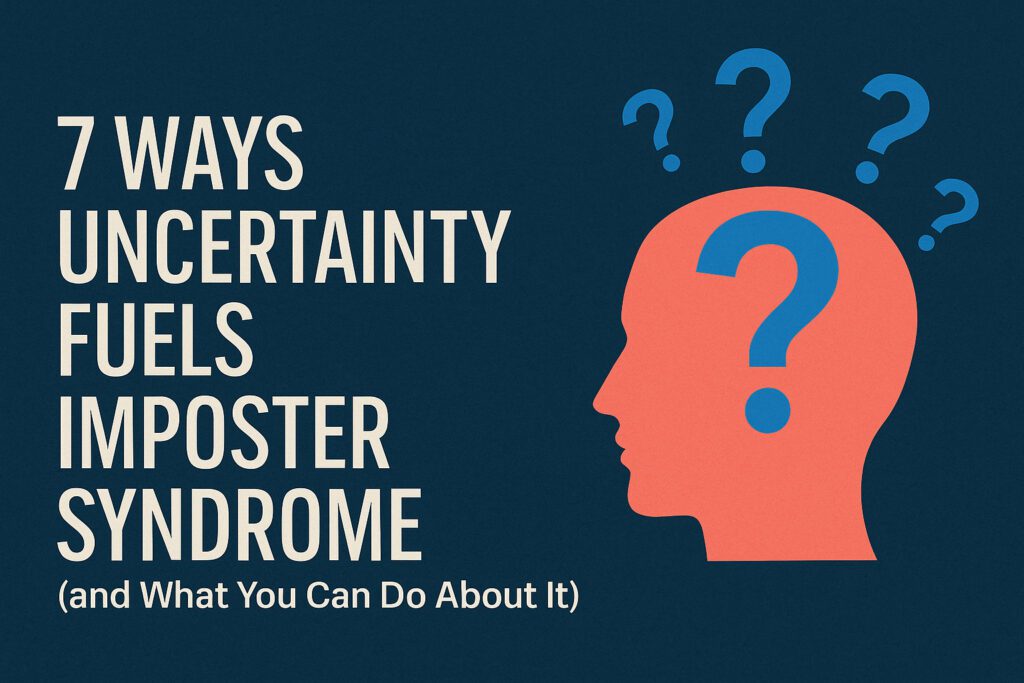
Imposter syndrome isn’t just about self-doubt - it’s about uncertainty.
That nagging “what if…?” spiral fuels overthinking, perfectionism, and the constant fear of being “found out.”
In therapy, I see this every week. People who look capable on the outside, yet inside feel shaky because nothing ever feels certain enough.
Here are seven ways uncertainty can drive imposter syndrome - and some ideas on how you can start loosening its grip.
1. Worrying About Being “Found Out”
The uncertainty: What if they realise I’m not good enough?
The impact: You spend energy second-guessing how others see you, rather than focusing on your work.
Therapy insight: In CBT and ACT, we treat these as thoughts, not facts, and practice showing up anyway.
2. Overthinking Mistakes
The uncertainty: Did I say the wrong thing? Will that slip cost me?
The impact: You replay conversations, emails, or meetings long after they’re over.
Therapy insight: CFT helps you meet mistakes with perspective and kindness, rather than endless rumination.
3. Constant Comparisons
The uncertainty: Am I measuring up? Do they know more than me?
The impact: Your worth gets tied to what others appear to achieve.
Therapy insight: ACT helps shift focus back to your own values, not someone else’s highlight reel.
4. Chasing Reassurance
The uncertainty: If I just get one more “you’re doing fine,” I’ll feel settled.
The impact: Relief never lasts, the mind always asks again.
Therapy insight: In CBT, we notice how reassurance can become a loop. The work is learning to tolerate not knowing.
5. Avoiding Risks
The uncertainty: What if I fail? What if I can’t handle it?
The impact: You play small, turning down opportunities that could stretch or reward you.
Therapy insight: ACT reframes discomfort as part of growth, helping you act in line with values, not fears.
6. Overpreparing for Every Outcome
The uncertainty: If I cover every detail, maybe I won’t get caught out.
The impact: Hours of unnecessary prep, exhaustion, and still no sense of safety.
Therapy insight: CBT helps test the “just in case” belief, while CFT softens the harsh drive for control.
7. Struggling to Celebrate Success
The uncertainty: Maybe this was luck. Maybe it won’t last.
The impact: Achievements never land - you move straight on to the next worry.
Therapy insight: EMDR can reprocess early experiences that left “success = unsafe” beliefs stuck in the system.
Moving Forward
Uncertainty is part of being human. But when your mind treats it as danger, imposter syndrome takes over.
The shift isn’t about eliminating doubt or finding 100% certainty.
It’s about changing how you respond, meeting uncertainty with compassion, flexibility, and courage.
If this cycle feels familiar, therapy can help you break it.